Projects
Runnymede Healthcare Centre
Completion: August 31, 2009
Location: Toronto
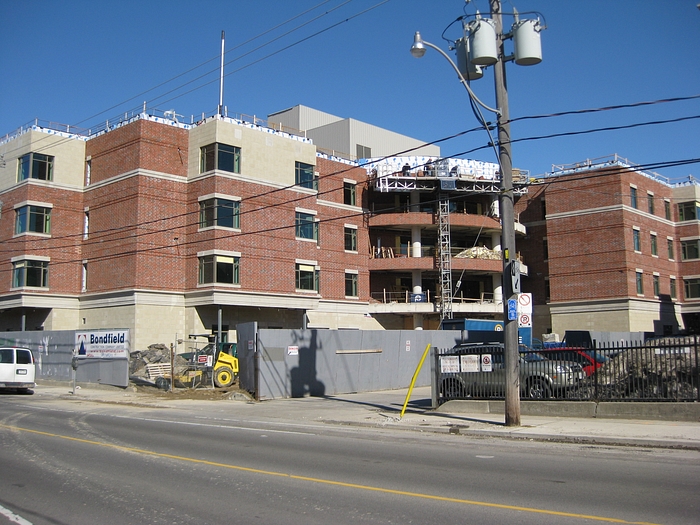
Construction of the new Runnymede Healthcare Centre began in November 2007 and was completed in spring 2010, ahead of schedule and on budget. Bondfield Construction Company Ltd. built the facility, and Kelson was responsible for the entire mechanical scope. The new 3 storey hospital was built on the existing Runnymede Healthcare Centre site, as an addition to the exiting hospital. Infrastructure Ontario worked with Runnymede Healthcare Centre. The existing facility was a 95 bed hospital serving long term chronic care to patients struggling with severe health challenges brought on by illnesses such as Huntington disease, Multiple Sclerosis, Parkinson's, Alzheimer's, ALS and severe strokes. The project involves building a new state-of-the-art 200-bed hospital to replace and expand the existing 95-bed complex continuing care facility. Clinical and medical services will be enhanced to include a full range of therapeutic services, physiotherapy, occupational therapy, communication and swallowing therapy, respiratory therapy, audiology, customized dietary programs, activation and recreation activities, social services and around the clock professional nursing and medical care. A pioneer of new treatments and services, Runnymede leads the way in helping its patients maximize their abilities and achieve a higher level of self-sufficiency, quality of life and dignity.
Mechanical Systems
Mechanical Highlights: The addition of 3 storey’s of hospital space at Runneymede Health Care Center increased the chilled water and heating water load to an already taxed plant. As such Kelson installed additional chillers, cooling towers and hot water boilers in order to support the additional floor area. New air handling unit complete with enthalpy wheel, preheat coil, cooling coil and humidification grids were provided according to CSA Z317.2 requirements. The enthalpy wheels were provided in order to reduce the energy impact of the additional floorprint of the building. In order to maintain humidity requirement connection to the existing steam plant were made and the steam extended through PRV stations to the air handling units. In order to support additional IT infrastructure, computer room A/C units were added to support heat loads within the IT spaces. A state of the art building automation system (BAS) was added to control this entire new infrastructure.